Live Happy's Logo
woman practicing mindfulness on a yoga mat in a studio.

Do We Really Need More Mindfulness?

The term “mindfulness” has become a part of our everyday vocabulary. What does this word mean? It might connote a mind full of thoughts. In fact, it is almost the opposite. Mindfulness involves cultivating awareness of our experiences, internal and external, without reacting. We become the observer of life’s happenings. We do not benefit from becoming upset, anxious, or depressed when things do not go our way. So, we simply notice what is happening as though looking down from above. The Challenge of the Present Moment Another key element of mindfulness is the focus on the present moment. Our brains are programmed through many thousands of years of evolution to ponder the future – what danger may be lurking? What is the worst thing that may happen? This catastrophizing may have been adaptive 200,000 years ago, as we sat in our caves, keeping a fire going and wondering whether a saber-toothed tiger might be lurking outside our dwelling. If we focused on such danger and prepared ourselves to react quickly, we tended to live longer and have more offspring. The genes and epigenetic factors associated with such wariness therefore propagated through the population over many generations. Nowadays, though, we are rarely confronted with such physical threats; yet, here we are, with the hard wiring that predisposes us to generate an acute stress response at the slightest provocation. Our adrenal glands are prepped to secrete adrenaline and cortisol when provoked simply by our thoughts. Our blood pressure and blood sugar skyrocket needlessly. Suppose we lack the resilience to quell the acute stress response and bring these hormone levels back down to normal quickly. In that case, they may become chronically elevated, leading to hypertension and type 2 diabetes. We are also predisposed to ruminating over the past. While it is adaptive to savor wonderful memories and consider the mistakes we have made so that we may learn from them, it is maladaptive to generate negative thoughts and feelings that bring self-blame, guilt, and even depression and anxiety. Too much focus on the past and future often means creating unpleasant ideations. Our brains are wired with a negativity bias. We tend to remember and be affected by negative experiences and thoughts than by positive ones. Negative things have a greater impact on our state of mind than neutral or positive things. We also tend to be overly judgmental. We explore our environment – including other people, the world, and ourselves – and perceive it as good or bad. Due to our negativity bias, we are more likely to view these elements as negative. In many cases (including my own), we are most harshly judgmental of ourselves. This contributes to depression and anxiety, two of the most prevalent mood disorders in our society. The Hope of Neuroplasticity The good news is that our brains have the remarkable quality of neuroplasticity. We can rewire our brains through focused practice. Our brains are capable of reorganizing themselves by forming new neural connections throughout life. They can adapt to environmental changes, learn, and recover from injury to a considerable extent. Neuroplasticity enables us to recover from a stroke by rerouting functions to undamaged areas. It allows us to learn a new language or how to play a new musical instrument, even later in life. Brain cells (neurons) actually change their structure and function in response to internal and external stimuli, including our thoughts themselves. The more we embrace positive thoughts, the more positive our thoughts become. We can learn to be more positive and less judgmental. Dr. Jon Kabat-Zinn, a founder of the practice in the United States, coined one definition of mindfulness. He defined mindfulness as “awareness that arises through paying attention, on purpose, in the present moment, non-judgmentally.” It seems intuitively obvious that paying attention to the present moment is essential, so why do we have such difficulty doing so? Our minds seem programmed to wander – to rapidly go from one thought to another, sometimes seemingly at random. We are easily distracted. We may even value “multitasking,” that is, thinking about and doing several things at once. In reality, we can only have one thought at a time, and jumping from one idea to another is an inefficient process. When we are multitasking, we often fail to accomplish what we intend to achieve to our full capability. When we are not truly focused on one task at a time, we are actually “task-switching.” We end up wasting time rather than saving time. We make more errors. We are less creative. Therefore, we really do need to “pay attention on purpose” to one thing at a time to be as productive as possible. How can we train our minds to focus on one thought or task at a time, given that we seem to be programmed otherwise? We can embrace a practice to rewire our brains to be more present rather than racing ahead or ruminating over the past. In other words, we benefit from a regular exercise of abiding in the present moment. This requires intention – hence the importance of the “on purpose” part of Dr. Kabat-Zinn’s definition of mindfulness. One version of mindfulness exercise is called the “GAIN” practice. GAIN is an acronym for what the author believes are the four essential domains of happiness: Gratitude, Acceptance, Intention, and Nonjudgment. Slow, deep, deliberate breathing is a core element of mindfulness practice. When we are stressed, we may go for many hours without taking a deep breath. Our diaphragm and other muscles involved in breathing are tense and contracted, preventing complete expansion of our lungs. As a result, the tiny air sacs in our lungs, called alveoli, tend to collapse, stiffening our lungs and limiting the amount of oxygen we can take in. Everything to GAIN When we practice mindfulness, we can start simply by focusing on our breathing. In the GAIN method, we inhale slowly to a count of three, pause to a count of three, and exhale without effort to a count of four. We are paying attention to our breathing, one moment at a time. As our chest and abdomen expand, we feel ourselves relaxing simply through this manner of breathing. We then begin a self-guided tour of the GAIN elements. We start with the “G” in GAIN as we acknowledge our gratitude for the gifts in our lives – loved ones, friends, pets, and living in a relatively safe environment with a roof over our heads. Even the simplest of things – isn’t it a miracle that we can step into the shower and experience warm water cascading over us? While continuing to breathe slowly, deeply, and deliberately, we transition to the “A” in GAIN, which stands for acceptance. As the Serenity Prayer teaches us, we must distinguish between what we can change and what we cannot change as we ponder the difficulties in life. We have all experienced the loss of a loved one, illness, fractured relationships, and other painful events. We identify one source of pain or discomfort and imagine opening our chest and heart and bringing this experience into our heart. We hold it there, nourish it, and embrace it as we relax our muscles. We may ask ourselves the question, “Can I live with this pain forever?” Eventually, the answer will be “yes.” Next come two of the elements in Dr. Kabat-Zinn’s mindfulness definition: intention (“on purpose”) and nonjudgment, the “I” and “N” in GAIN. We continue to breathe intentionally, drawing our attention to our current experience – the pressure of the chair against our bodies, the sound of a car or airplane passing in the distance, and the subtle tingling at the soles of our feet. Our mind may begin to wander after a few seconds – then we gently bring our attention back to the present. Gradually, we will be able to abide in the present moment for a more extended period. We transition to nonjudgment as we continue to expand our chest and abdomen with each full breath. We may picture a lovely NASA image of the Earth, apparently suspended in space. It is a lovely planet, but the Earth does not possess qualities that are inherently good or bad. It is simply the planet that it is – neither good nor bad. It is only logical that we, too, are neither good nor bad. We are merely human beings. We simply are. We might repeat the phrase, “I simply am the person that I am. I am.” We next return our full attention to the breath – slow, deep, and deliberate. We then gently open our eyes. We are ready to go out into the world. A Practice of Patience There are many versions of mindfulness practice. We are well served by finding the one that fits us best and sticking with it. Daily practice is most productive, as we slowly rewire our brains to pay attention to the present moment, on purpose, nonjudgmentally. Our brains evolved over many thousands of years to be the way they are, including this “wandering mind” condition. We cannot rewire our brains overnight. Let’s be patient and go easy on ourselves, embracing baby steps toward a happier condition, including the ability to appreciate the present moment. That is what mindfulness is all about. Greg Hammer, MD, is a recently retired Stanford University School of Medicine Professor and physician, mindfulness expert, and the author of the best-selling, award-winning book, GAIN without Pain: The Happiness Handbook for Health Care Professionals. Dr. Hammer is a health enthusiast and meditator, utilizing a non-duality and mindfulness-based approach, including the GAIN method.   Learn more at amindfulteen.com
Read More
The 6 Keys of Positive Relational Energy

The 6 Keys of Positive Relational Energy

Etelle is a human rights lawyer and environmental activist. She can be found doing investigations on deforestation and child labor in the jungles and forests of Africa and South America, often risking her own life, as nearly happened on a mission in an African country where she was working to stop a rubber company from illegally cutting down trees. As Etelle was about to leave for the airport, which was three hours away, her driver mysteriously disappeared. The local officials suspiciously insisted she set off for the airport with two threatening-looking, muscle-strapped strangers in military apparel. The safety concerns were obvious: The rubber company Etelle was investigating for illegal deforestation had built close financial ties with the country’s leaders. Her activism was a potential threat to the kickbacks the leaders were receiving. Still, she had no other choice than to get into that car. In those three momentous hours in the car with her would-be hitmen, Etelle worked a miracle. She connected with her handlers in such a way that they not only safely escorted her to the airport, but also shared their snacks with her and—get this—even held up a little sheet to give her privacy while she relieved herself by the side of the road. When they safely dropped her at the airport, Etelle received confirmation that they had been ordered to kill her. They warned her that she was not safe in their country and that she shouldn’t ever come back, but that, if she did anyway, she should travel over a land border and under their protection. And that she should stay with them. How did Etelle turn her hitmen into protectors? She didn’t threaten them, seduce them, or pay them. She didn’t need to. Because Etelle has something much more powerful than that: positive relational energy. Kim Cameron at the University of Michigan’s Ross School of Business, together with his colleagues, discovered the fascinating science of relational energy while studying organizations. He noticed that among these large networks of people, certain subgroups stood out as anomalous. They had significantly higher levels of productivity than other groups at the company. Not just a little higher, much higher. What was going on here? Looking further into the data, you see that one person at the center of this subgroup is causing the effect. And—though it didn’t sound scientific—the best way researchers found to describe this person was that they had contagious positive energy. Others, on the other hand, had the opposite effect. They were de-energizing. Being around them made people feel less motivated, less enthusiastic, and less alive.  Thinking back on your own life, you’ve probably experienced that some friendships and work relationships are draining while others are enlivening. The good news is that anyone can learn to be a positive energizer. Because it is both extraordinary and absolutely ordinary. The 6 Keys of Positive Relational Energy Positive Energizers relate to others in such a way that they are a catalyst for those around them to get in touch with and reach their fullest potential. They raise their own energy and that of others. Both the giver and the receiver leave the interaction uplifted. These Energizers live a fulfilling and productive life and are magnetic. What makes someone a positively energizing person? Based on Kim’s research it involves six things: 1. Caring for, being interested in, and seeing the best in others—their qualities and skills, their attributes and gifts. In so doing, you meet their fundamental need to be seen, heard, and valued. To feel safe and to trust. You let others know that you appreciate them for who they are and that they matter and that you have their back. 2. Providing support for one another, including offering kindness and compassion when others are going through a hard time. Everyone has moments of struggle, and when someone knows you genuinely are there for them during those times, it automatically deepens your relationship. Think about someone who was there for you unconditionally when you were going through a hard period in your life—perhaps it was a mentor or a friend, a teacher or a boss. If that person were to call you right now and ask for help, you’d probably drop everything to do what you could to help. That’s the kind of loyalty that grows out of a deeply supportive relationship. 3. Avoiding blame and forgiving mistakes, not holding on to grudges. Making mistakes is a basic part of the human condition. It’s how we learn. Forgiveness both benefits the relationship and increases your own well-being, research shows. 4. Inspiring one another and focusing on what’s going right. It’s easy to  be negative, criticize, and complain, but it’s also de-energizing and depleting—both for yourself and others. Positive Energizers don’t just focus on what’s going right, they make a point to emphasize it and celebrate it. Gratitude, for example is a tenet of wisdom. It is energizing and enlivening both for yourself and others. Research shows it strengthens relationships. 5. Emphasizing meaningfulness. Whether you’re parenting children together or working on a group project at your job or in a community, focusing on the impact and benefit of what you are doing is a powerful motivator. It reminds others of the impact they have. In one of my favorite studies, workers at a university alumni call center doubled their productivity after they heard a student talk about the difference financial aid had made in her life. Feeling that you are contributing in some way and making a difference is automatically energizing and inspiring, research shows. 6. Treating others with basic human values. Like respect, gratitude, trust, honesty, humility, kindness, and integrity. Think about it. When you know someone has those kinds of values, you automatically feel trust and safety around them. You can relax and let your guard down. You know they will do the right thing, so you appreciate them. These are the type of people you want to be around and want to be like. They are uplifting. 7. Most importantly: they fill their own tank. They have a good relationship with themselves. They take care of their mind, body, and soul with respect. In a time when 80% of millennials endorse the idea “I am not good enough” – essentially having a toxic relationship with themselves – it is powerful to have a firmly life-supportive relationship with yourself. And that’s sovereignty. Excerpted with permission from Sovereign: Reclaim your Freedom, Energy and Power in a Time of Distraction, Uncertainty and Chaos by Emma Seppälä. Available wherever books are sold.
Read More
young woman walking to work listening to music and drinking coffee.

5 Strategies to Help You Enjoy Going to Work Again

Are you walking on eggshells around your employer? When it comes to dealing with a hard-to-please and perfectionistic manager, many employees find themselves riddled with anxiety. While others in the company might praise the boss for promoting high standards and a strong work ethic, the employees of this type of perfectionistic supervisor can feel oppressed, intimidated, and discouraged. Perfectionistic bosses often have extreme expectations of others (or themselves), think in a highly rigid manner, seem fixated on processes and efficiency, come across as self-righteous, and overemphasize rules (e.g., be at work at 7 a.m.) instead of principles (e.g., be a punctual person). Not surprisingly, these managers can create an exceptionally stressful work environment, resulting in employees feeling like they’re never doing enough, their goals are insufficient, and their standards are subpar. This tends to be demoralizing for the entire team. As a result, employees stuck in this workplace culture often feel helpless, and after contending with continued frustrations, they can eventually experience profound hopelessness. When a boss’s perfectionistic tendencies are projected onto others in the workplace, it can lead to many feeling like they have to tiptoe around the office. This is because employees are terrified of completing "imperfect" work, which can set off a prickly boss. Fortunately, there are ways to make this work situation more manageable. Although there are no magic techniques that will guarantee success, the following strategies can help you breathe more easily around a perfectionistic boss: 1. Pick Your Battles Do not fight the war on every front. Be judicious about which of your boss’s behaviors and interactions you address. Accept that you cannot fix all of them, as employers often don’t respond well to pushback at every turn. For this reason, it’s vital to find the balance between addressing their perfectionism and preserving your relationship with them. 2. Use Assertiveness to Communicate An assertive communication style generally protects the relationship, preserves self-respect, and conveys your needs. When taking this approach, choose language that focuses on your experience rather than your boss's shortcomings. You can do this by selecting "I" rather than “You” statements. For example, instead of saying, "Your timeline is unreasonable and unfair,” try, "I'm worried about getting this project done on time, as the timeline seems very ambitious." Communication also includes nonverbal behavior. You can’t say the assertive statement while rolling your eyes and snickering because it will invalidate the proactive nature of the content. 3. Be Private Do not call out a perfectionistic boss in public, in front of the team, or in front of the boss’s supervisors or other key stakeholders. This is a recipe for defensiveness and shattered trust in the workplace. Instead, provide feedback to them in private. 4. Leverage Strength in Numbers Sometimes, it is more effective when a cohort of individuals gently brings feedback to a perfectionistic supervisor. It’s easy for a perfectionistic boss to dismiss one person’s concerns, but it’s a little more challenging when it’s coming from a group of people. This only works, however, if the communication strategy isn’t hostile (see #2 above) and isn’t public (see #3 above). 5. Set Reasonable Boundaries Combine these tips with your assertiveness to establish reasonable boundaries with your boss. Boundaries work best when they are based on your values. Do you place high regard on work-life balance, family, financial security, learning, and curiosity? Use these values to guide what boundaries you need to set with your employer. However, be mindful that your values may not always align with those of your boss or organization and that you may need to negotiate these with them. While these tips will help you address a manager’s perfectionistic behavior in most situations, not all bosses will respond well to feedback or attempts at addressing their perfectionism. Therefore, it’s imperative that you assess your particular situation and determine whether these tips make sense for your workplace. Perfectionistic bosses can be tricky to navigate, but you now have tools to reduce your workplace anxiety and create a more harmonious workplace culture. Dr. Greg Chasson is a licensed clinical psychologist and board-certified cognitive-behavioral therapist. He is also an Associate Professor, the Director of Behavioral Interventions of the Obsessive-Compulsive and Related Disorders Clinic in the Department of Psychiatry and Behavioral Neuroscience at the University of Chicago, a keynote speaker, and the author of FLAWED: Why Perfectionism is a Challenge for Management.
Read More
Setting goals next to a window with a cup of tea.

How to Create a Master Goal for Your Life

It’s the end of January, which means that 80% of all those New Year’s resolutions that were set just a few weeks ago have already failed. What is it about those “new chapter” objectives that make them so hard to keep up with? Is the New Year’s goal just some hoax dreamed up by the personal fitness industry to drive new gym membership sales? Actually, the psychology of goal-setting says that there is probably no better time than the new year to set these types of goals. The Association for Psychological Science says that setting goals at a calendar transition point—such as the start of a new week, a new month, a new financial quarter, and especially a new year—takes advantage of a “fresh start effect” that makes people “more empowered and motivated to pursue their goals when they feel like their past failures are behind them and their future success is ahead of them.” The fact is that modern humans have become bad at goal-setting in general, no matter what time of year it is. New Year’s resolutions are just more visible, which makes their failures more obvious. The real culprit behind consistent goal failure, as well as the key to success, can be found in the motivational reward system that goals are designed to trigger. Why goals motivate us As complex as our feelings can be, they are based on only a handful of chemicals that blend together like a color wheel to produce our vast range of emotion. Four of these chemicals are the primary influencers of happiness: dopamine, oxytocin, serotonin and endorphins (collectively the “DOSE” hormones). Of these chemicals, the one primarily associated with the positive feelings of motivation and energy is dopamine. Dopamine is released to motivate us when we think about a goal we would like to pursue, and to reward us as we make progress towards achieving that goal. When we set a new goal at the beginning of the year, we get a positive feeling associated with that new pursuit, and this feeling comes from dopamine. The problem occurs when we lose focus of our goal or even after we successfully accomplish it. With no future goal to focus on, the brain’s dopamine reward system shuts down and reverts to the fight-or-flight chemical cortisol to fill the void. This leads to anxious thoughts and negative health effects. How to make goal motivation sustainable The key to this problem—not just for New Year’s resolutions, but for any of our pursuits—is to connect our short-term objectives with a long-term “master goal” for our life. Dr. Angela Duckworth, a prominent psychologist at the University of Pennsylvania, calls this goal a “top-level concern.” In her book Grit: The Power of Passion and Perseverance, she explains that all humans organize their life through a hierarchy of goals within their subconscious. Some of these goals are more obvious than others, but they exist regardless of how aware we are of them and the more we can align with them, the happier we will be. When we identify a top-level goal, or what I call an ideal goal for our life, and then find a way to connect our short-term goals with that ideal, we can activate a more sustainable dopamine reward system that provides consistent focus over a longer period of time. It makes it easier for us to complete our goals, and then helps to avoid the post-achievement dopamine crash by providing a path from that goal to another one also connected to the same long-term Ideal. The historic Olympic swimmer Michael Phelps provides a great example of this. For most of his life, he thought that his top-level goal was winning a gold medal. But when he accomplished this feat (and then some), he was left feeling depressed and even suicidal. As he explained in his HBO documentary The Weight of Gold, he was able to make it through this period by realizing that a better top-level goal would be to help others deal with their mental health issues through sharing his personal story. He used this new ideal goal to return to the pool and have another successful Olympic Games, but then was able to continue a joyful pursuit of goals by launching a campaign to support mental health awareness. Find your own personal ideal This year, rather than start by thinking about a new short-term goal you want to achieve, you may be better served by spending time thinking about the long-term vision of the type of person you wish to become. Then, you can use that vision to fuel the motivation needed to sustain your efforts. Mark R. Congdon is the author of The Ideal Life: 7 Steps To Harness Your Stress, Discover Your Purpose, And Achieve Your Goals. Mark has a master’s degree in Industrial-Organizational Psychology from the Harvard Extension School and is the founder and CEO of Into the Ideal, an organization helping individuals find their purpose, joy, and the career they deserve. For more about Mark, check out markrcongdon.com.
Read More
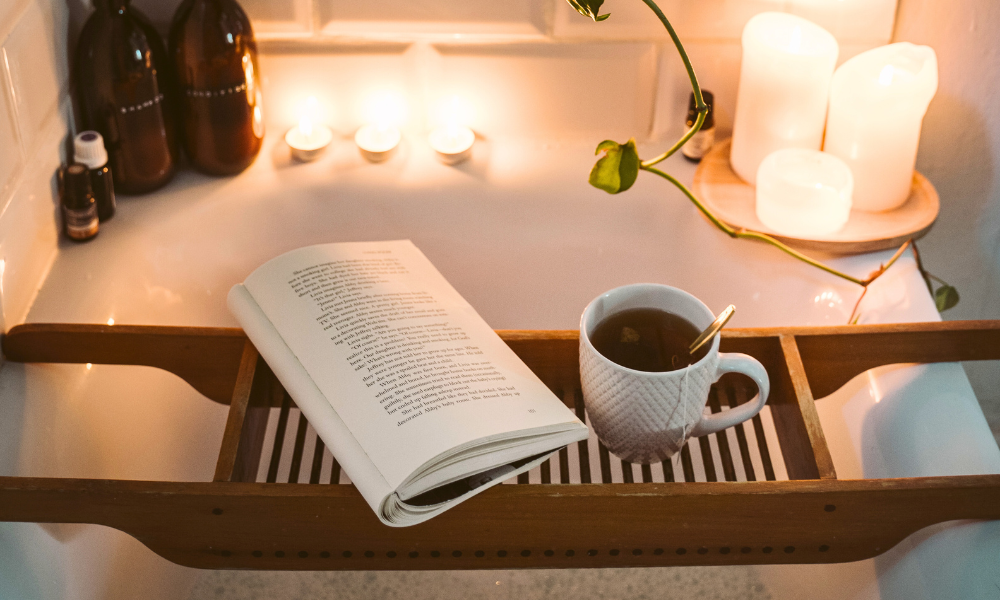
bath tub with candles and book.

6 Must-Read Mental Health Books

Mental health books offer indispensable insights into the complexities of the human mind. Kristian Wilson, a licensed mental health counselor with Grow Therapy, says mental health books complement traditional therapy or counseling by offering additional perspectives and tools for self-improvement. “They can act as a supportive resource, reinforcing therapeutic concepts and encouraging ongoing personal development outside of therapy sessions,” she says. While not a replacement for therapy, mental health literature can help teach readers to cultivate resilience, cope with challenges, and foster greater compassion and empathy. The power of bibliotherapy Bibliotherapy is a therapeutic practice and form of self-care that uses literature to promote emotional well-being and personal growth. Rooted in the belief that reading can be transformative, bibliotherapy involves strategically selecting books, poems, or written materials that resonate with an individual’s emotional struggles, life experiences, or psychological challenges. Bibliotherapy encourages self-reflection, empathy, and a deeper understanding of oneself and others. It can complement traditional therapeutic methods, offering a unique and engaging way to explore complex emotions, cope with difficulties, and foster a sense of empowerment. “Reading mental health books can enhance self-awareness by prompting readers to reflect on their own thoughts, feelings, and behaviors,” Kristian says. “This process contributes to emotional intelligence by deepening one’s understanding of themselves and others.” Integrating mental health literature insights into daily practices supports enduring mental resilience and individual development. Books that discuss mental health serve as invaluable guides on your journey toward emotional well-being. From traditional “self-help” to fictional stories that tackle difficult mental health topics, the books on the following list illuminate the pathways to self-discovery, healing, and personal growth. 1. Darling Rose Gold by Stephanie Wrobel Topic: Healing from childhood trauma Parent-child relationships can be complicated. How a child grows and chooses to reclaim that power over those situations as an adult can impact mental health for years to come. The first mental health book on our list examines how one woman reclaims her power from her mother after suffering years of abuse at her hands. In this best-selling thriller, the author looks at the dynamic between Rose Gold and her mentally ill mother, taking a bold look at how child abuse and mental illness can destroy the most sacred relationships. This novel tackles how circumstances surrounding childhood trauma can impact victims long after the abuse ends, but also looks at how survivors can reclaim their power from their abusers and move forward. 2. The Girls at 17 Swann Street by Yara Zgheib Topic: Battling eating disorders Eating disorders can manifest as coping mechanisms for underlying psychological distress; anxiety, depression, low self-esteem, and trauma can fuel their development. Some researchers say eating disorders signify that the person dealing with these issues doesn’t feel a sense of control in their life. This desire to maintain control over food when control of everything else seems to be slipping away is precisely what Yara Zgheib examines in her debut novel, The Girls at 17 Swann Street. The book follows a young dancer named Anna Roux who, consumed by perfectionism, finds herself trapped with her biggest fears: feelings of failure, loneliness, and imperfections. She begins spiraling out of control and develops a serious eating disorder. Her condition becomes so severe that she’s admitted to a care facility at 17 Swann Street. There, Anna meets other girls struggling just like her. Together, they learn to conquer their illness and eat six meals daily. “The Girls at 17 Swann Street” delicately addresses the complicated relationship between mental well-being, self-acceptance, and the transformative power of resilience. 3. Daisy Jones & The Six by Taylor Jenkins Reid Topic: Coming-of-age This award-winning novel by Taylor Jenkins Reid may seem an unlikely addition here, but the themes in this coming-of-age story provide insights into the emotional challenges of growing up. Reid follows the fictional life of up-and-coming rock star Daisy Jones. Set in the late ’60s, this exciting oral history weaves the story of her and her band, The Six, and their rise to fame. With its vivid portrayal of characters navigating the complexities of their formative years, including the challenges of fame, relationships, social anxiety, and self-discovery, this fun-filled novel excels as a coming-of-age story. It sensitively addresses mental health, showcasing how characters grapple with their emotional struggles, ultimately emphasizing the importance of support, self-acceptance, and personal growth. 4. The Unapologetic Guide to Black Mental Health: Navigate an Unequal System, Learn Tools for Emotional Wellness, and Get the Help You Deserve by Rheeda Walker Topic: Mental health and the Black diaspora Mental health in the Black community is often overlooked. This is why it’s crucial that books dealing with mental health and mental health care in Black communities, written by Black authors, are available. In her book The Unapologetic Guide to Black Mental Health, Dr. Rheeda Walker examines crucial mental health issues in the Black community. She draws from personal experience to look at the Black community’s crisis regarding mental health conditions, including fighting the stigma surrounding them. This is an exceptional mental health book that provides a much-needed perspective on the intersection of mental well-being and racial experiences. By addressing the unique challenges faced by the Black community, this book offers critical insights, tools for emotional resilience, and a supportive framework for fostering mental wellness within a racially unequal system. 5. This Too Shall Pass: Stories of Change, Crisis and Hopeful Beginnings by Julia Samuel Topic: Dealing with change and crisis Sometimes, the best method for addressing a season of poor mental health is talking with someone who shared a similar experience. Psychotherapist and bestselling author Julia Samuel shares stories from actual sessions with patients, allowing readers to make connections to their unique mental health journey. This book fearlessly confronts the crucibles of family, love, profession, health, burnout, overthinking, and self-discovery. 6. Reasons to Stay Alive by Matt Haig Topic: Conquering depression Depression is a common challenge for many and can sometimes lead to thoughts of self-harm. While it may be hard to see in the moment, things do get better, and this is something the author reminds readers of in Reasons to Stay Alive. In this compelling memoir, Matt Haig details when, at the age of 24, he was consumed with an overwhelming desire to end his life. As he shares, he eventually discovered how to heal. Cleverly written, Matt uniquely approaches such heavy subject matter, interlacing it with moments of joy and humor. Write Your Own Chapter of Healing and Growth The story of your mental well-being is still being written, and these books are but the beginning chapters of an epic tale. Keep reading, growing, and celebrating the power of controlling your mental health. Isbell Oliva-Garcia, LMHC, is a licensed mental health clinician in based in Florida. To learn more about how therapy could benefit you, visit Grow Therapy
Read More
Dawn McMullan and Gorethy Nabushosi with some of the students in the Congo Restoration sewing school.

Restoring Women’s Lives in the Congo

When Dawn McMullan visited Africa in 2007, she never dreamed it would change her life in so many ways — or change the lives of others. “I went to Rwanda on a trip with my church and saw things I didn’t know existed,” says Dawn, a freelance writer and editor in Dallas, Texas. The country had been ravaged by civil war in the mid-90s; more than 1 million people died in Rwanda and 6 million were killed in the Democratic Republic of Congo. “I’d seen deep poverty [on other mission trips], but I hadn’t seen a lack of infrastructure where basic human needs were just unreachable.” That experience was still fresh in her mind when she met Gorethy Nabushosi less than a year later. Gorethy, a refugee who had fled the Congo in 1997 and raised her six children in Dallas, had visited her home country to see how she could help. A decade after the genocide, she saw a system that was completely broken. [caption id="attachment_19859" align="aligncenter" width="225"] Gorethy Nabushosi with twin fifth grade students from the Congo Restoration sewing school.[/caption] “She went to a village and basically found a lot of orphans and took in all 30 kids,” Dawn says. “Then she called her husband and said, ‘I need $1,000 to figure out what to do with these kids. I can’t leave them.’ And that’s how it began.” Unsure of where to turn, Gorethy returned to Dallas and reached out to a Methodist church for help. The church connected her with Dawn, who immediately jumped on board. “When Gorethy came into my life, I was already somewhat familiar with the situation and had this great, inexplicable passion for it,” Dawn says. “From there, we started what became Congo Restoration.” Changing Africa One Woman at a Time The first order of business was to secure a home with caretakers for the 30 orphans Gorethy had taken in. Then, they focused on empowering women through education. In 2010, they started a sewing school that provided girls with a skill and a six-month education. In the Congo, girls and women are usually sent to work in the fields; Gorethy knew that offering them an education would be life changing. “Not only does that give them a way to make money that they didn’t have before, but it also raises them up in society,” Dawn explains. “They’re no longer the lowest ranks of society; they are respected women, because they have a business. They can send their kids to school. They’re in charge of their financial destiny. And that is not a thing in the Democratic Republic of Congo that a woman would usually be in charge of.” Initially, it was a hard sell to convince parents to take their daughters away from working in the fields to teach them a skill because it meant the girl wouldn’t be bringing home money during that time. Sometimes, Dawn says, they had to offer the family things of value like soap or salt to seal the deal. But the sewing school has now graduated more than 800 women, supplying each one with a sewing machine and a sewing kit with everything they need to start their own business. Creating a Brighter Future “Now when we're about to graduate a class, hundreds of women line up wanting to be in that next class,” Dawn says. “Their families cry when they get their diploma. It’s a shift in how the community sees these women.” She also sees dramatic changes in the women who attend the school: “We teach them a lot of things in those six months. Sewing is one of them, but there are other things we teach them about how valuable they are. And by the time they graduate, you can see that in their eyes.” Congo Restoration continues changing the lives of families in the Congo, but Dawn says she is the one who has gained so much from the work. “When I go to Congo, when I’m doing things for the schools, I get so much thanks from the people there,” she says. “But they have no idea how much they’re changing me, how much they’re teaching me. I wish everyone could find the one thing they can do like that that lights them up. “If everybody did something with a passion to do good in the world, there’s just no way the world’s not benefiting from all that good energy.” [caption id="attachment_19865" align="aligncenter" width="300"] Gorethy Nabushosi with recent graduates of Congo Restoration's sewing school.[/caption]
Read More
Women relaxing on couch.

4 Ways to Be Happier in the New Year

A new year is here and it’s always a great time to reassess our lives and figure out strategies that can improve our life satisfaction and well-being. According to Gallup,  the state of global unhappiness is on the rise and feelings of anger, sadness and stress are all contributors. While some of the major factors that are bringing down our collective happiness may not be as easy to get a handle on (global pandemic, economic uncertainty, polarization, etc.), we can take individual steps to help improve our lives and boost our well-being so we can have a buffer for when those negative stressors start to strike. Goal-setting, optimism, relationships and self-care are just four things you can work on this year to boost your well-being, and now is as good a time as any to start moving that happiness compass in the right direction. Set Realistic Goals Goal-setting season is upon us and a fresh new year seems like a natural time to start something new to work toward. While many set goals at the beginning of every new year only to see their effort run out of steam in just a few weeks, there are some steps you can take to make sure new habits have staying power. If our goals are to set too high and require too much bandwidth to complete, we will never reach them. Instead, map out your goal and see where you can it up into “bite-sized” bars. This accomplishes two things: you can celebrate the smalls wins to keep you motivated for the bigger picture, and you won’t be overwhelmed with an insurmountable task that intimidates you from even starting. Look on the Brighter Side We’ve all heard or read the affirmations of positive thinking ad nauseum, but there are sound reasons behind the sage advice of making lemonade out of lemons. Having higher levels of optimism may help you handle the day-to-day stressors that life throws at you and could be associated with  living longer, according to the latest research published in The Journals of Gerontology. Optimism, an attitude or belief that outcomes to your actions will generally be positive, will also help you in relation to other tools of well-being, including goal-setting. When you are met with setback that may otherwise impede your progress, your optimism may give you the mental edge to persevere toward your targeted goals. While some people just naturally have a sunnier disposition than others, one method to improving your optimism is to adjust your perception to negative situations, such as failure, as opportunities to grow. Strengthen Your Relationships One of the strongest indicators to living a happy life is measured by the quality and depth of relationships, according to the Harvard Study of Adult Development. As people, we are naturally drawn to connect with one another, and feelings of isolation and loneliness only brings down our life satisfaction and can have dramatic negative consequences to our health and well-being. A recent poll from CivicScience shows that our positive relationships with others is a major factor when we define our own happiness. Whether it is family, friendships or relationships, people like to be around other people to make them feel better. A few things you can do to strengthen your relationships is to continue to make time with the people close to you and savor those moments. Expressing your gratitude and appreciation toward others will also help you reaffirm the good in people and lets them know how much their presence in your life means to you. Strive for More Self-Care While the term self-care may seem like a popular buzz word to describe superficial acts of self-indulgence, there is emerging science to back up the practice of personal check-ins and check-ups to ensure you live a healthier and happier life. While it is good to attend to the needs of others, it’s equally as good to not forget about the attention you need so you don’t fall into negative cycles of self-loathing, low self-esteem and guilt. When these feeling become too frequent and pervasive, it may be a symptom of a larger problem, such as anxiety or depression. One way to reduce those negative feelings, is to fit more mindfulness into your daily routine. Studies show that practicing mindfulness can even reduce your anxiety levels as much as some antidepressants. Whatever method or exercise you use, 10 to 15 minutes of mindfulness a day to unplug from the outside world in tune in to the present self can bring your life back into a healthy balance.
Read More
Woman giving present wrapped in white paper with red heart

Live Happy’s Holiday Campaign Celebrates the True Gift of Giving

Now that the holidays are here, it’s important to remember what the giving season is all about.  Prosocial acts, which are intentional behaviors that benefits others, truly is a gift that is given and received. While the person on the receiving end may be impacted in a positive way, the giver also receives those emotional rewards that make us feel good. These acts of kindness, no matter how big our small, create positive connections between people for a better society because the good cheer will carry on months, to even years later. According to science, there are plenty of other positive reasons why giving is good for you, including benefits to your physical and mental health. Research shows that giving—whether it is time, money, or gifts—contributes to our happiness and well-being, by: Lowering blood pressure Boosting self-esteem Reducing effects of depression and anxiety Decreasing levels of stress Increasing overall life satisfaction 12 Days of Giving During the month of December, we are embarking on a new kindness campaign in the holiday spirit of giving and it’s our Live Happy followers who will receive. Our 12 Days of Giveaways kicks off 12/02/2022 and each day is a new opportunity to receive a gift donated from one of our participating sponsors. We have partnered with brands who think and act like us with the greater good in mind. These brands not only offer great products but also have missions with a higher purpose of making the world a happier place. Here’s How to Win To enter Live Happy’s 12 Days of Giveaways, just follow us on Instagram @mylivehappy. Each day will be a new chance to win simply by liking that day’s post. All you have to do is follow Live Happy and the sponsor featured in the Instagram post. Then, just tag someone you know in the comments and that’s it. Live Happy staff will randomly select a winner and contact you to let you know you’ve won. Here is a list of our wonderful partners during the 12 Days of Giveaways: Neora, Bold Made, Emotion Wonderland, Type K Studio, Just Made, Big Shifts 31-Day Kindness , Yipes!, Taco vs. Burrito, Wholly Guacamole and (of course) Live Happy. So, be sure keep an eye out on December 02 on Live Happy’s Instagram so you don’t miss a chance to win one these great gifts. Happy Holidays!
Read More
Kids dressed up in costumes

5 Halloween Trick or Treat Etiquette Tips

Halloween is the one night a year when adults and children come together to share their mutual love of scary stories, dressing up in costumes, and, of course, candy! One of the great delights for children is engaging in the traditional night of trick or treating. Americans alone spend billions on candy at this time of year. Whether you're the parent of a very young child or you're ready to venture off alone with your friends, there are a few things you should pay attention to when you're about to start trick or treating. Remembering basic etiquette is a must when you're about to trick or treat. This is because you may interact with strangers, some of whom may not be in the holiday spirit. It's always important to remain respectful when you're ready to trick or treat and consider how you approach your neighbors and friends. Trick or treating is a super fun and exciting opportunity to make friends, get to know your neighbors, and to enjoy plenty of sweet treats, but you'll need to abide by these five etiquette tips to ensure everyone has an enjoyable night! To find out five trick-or-treat etiquette tips for a safe and happy Halloween, keep reading. 1. Politeness and manners are free and always necessary Remembering basic manners is one of the most important things to think about if you're a child (or adult, we don't judge) who's about to trick-or-treat. Sometimes, it's easy to forget the value of please and thank you. Still, basic politeness and manners go a long way, especially if you're engaging with new neighbors or people you've never interacted with. Remember, when you're trick or treating, you're entering someone's grounds or property, even if you're simply standing on their porch. Think about how you would want to be treated if someone came to you wanting candy on Halloween. Saying please and thank you before and after you take your candy will go a long way, plus it’s a chance to sharpen your gratitude skills. If you knock on a neighbor's door and see that they've dressed up for the occasion, why not pay them a compliment? They'll likely comment on your costume, so return the kind favor. Plus, compliments can increase your happiness as well as the person on the receiving end. One last politeness tip to remember is never to pester your neighbor. If they don't want to answer their door, don't shout or ring their doorbell over and over again. You never know why people might not want to celebrate Halloween, so it's always best practice to be respectful and quiet during trick or treating. 2. Don't be too greedy! Although you might be tempted to grab handful after handful of your favorite sweet treats, try to resist the urge! Remember, other trick-or-treating parties will follow who will want to indulge in the same candy as you, so try to be mindful of other people around you. This is also important as you won't want to come across as greedy to the kind neighbors and homeowners who are kind enough to hand out candy to you. Don't snatch or grab large handfuls to get ahead of your friends. Additionally, if you notice your favorite candy type, don't just take handfuls of this. Make sure you leave enough for your friends and other trick-or-treating parties. 3. Make it clear you're ready to hand out candy and think about allergies! This is one for those preparing to hand out candy this Halloween. When preparing for Halloween, make it clear that you're willing to hand out candy. You can do this by leaving a jack-o-lantern outside your home or leaving a sign for trick-or-treaters. These visual cues take away a lot of uncertainty associated with treat-or-treating and mean that parties know which houses to go to and which to avoid. Another important thing to remember when you’re handing out candy is to ensure you consider allergens or candy preferences to cater to people’s needs. Try to avoid candy with nuts, milk, egg or other prominent allergens that could stop trick-or-treaters from enjoying Halloween. Try to keep treats meant for trick-or-treaters with allergies separate from your other candy to reduce cross-contamination. When you hear a knock at your door, communicate with trick-or-treaters that you have options for anyone with allergies in a separate bowl! 4. Pay attention to a house's visual cues Now back to you trick-or-treaters. While hunting for candy, it can be easy to assume that everyone is ready with a bowl of treats by their door. However, this isn't the case. Over 172 million people in the United States celebrate Halloween. Although that is a huge number, not everyone will be available or willing to carve a pumpkin and invest in some sweet treats. To avoid confusion and awkward waiting on people's porches, try to pay attention to visual cues outside people's properties. Often, people will put decorations like pumpkins, spider webs, or the occasional spooky skeleton on their lawn or porch to signal that they're in the festive mood. Try to stick to these homes and avoid properties with no lights on, no decorations, and the curtains shut. They may be out or signaling that they're not in the spooky spirit. It's important to respect this at all times to avoid pestering anyone who's not celebrating Halloween. 5. Always stay on the sidewalk and be respectful of other people's properties While you're lost in the sugar-induced haze and mesmerized by the array of costumes surrounding you, it can be easy to forget your environment. However, you'll need to maintain situational awareness at all times. That means you should always stick to the sidewalks and ensure you don't run across the roads to get to the house with the best Halloween decorations. Not everyone celebrates Halloween, so there may well be residents commuting from work, running errands, or simply driving around during the evening. Remember to be respectful and avoid getting in their way while crossing roads. Another important thing to remember is to be respectful of people's property. That means you shouldn't walk on their lawns if you can avoid it and not touch their decorations. Not only is this disrespectful, but it might also harm your chances of being invited back to trick-or-treat or discourage your neighbors from handing out candy next year! Trespassing is also an important thing to consider when you’re on the hunt for candy. You should never trespass on gated communities and other HOA communities that use access control door locks. These mechanisms restrict access to private areas within a community. These areas aren’t accessible to the public, only to residents, so you should always steer clear of these areas; otherwise, you’re breaking the law! Don’t forget to have fun and have a Happy Halloween! Looking to put your unique stamp on Halloween this year, or trying to find ways to connect with your community and make memories at this festive time? Look no further than LiveHappy. At Live Happy, we're committed to helping you find ways to live a more enjoyable life by sharing stories and providing you with some great tips for living your life. We've compiled some great tips to spread Halloween cheer this year, such as by putting your unique twist on Halloween this year.
Read More
Kids doing arts and crafts

The Art of Parenting

As the mother of three children under the age of 10, Kate Vastano is used to finding unexpected surprises around the house. But when she discovered that her 5-year-old daughter, Jules, had painted the wall with nail polish, it stopped her in her tracks. She learned that Jules had been trying to paint their dog’s toenails, but when he refused to cooperate, Jules decided to hone her painting skills on the only other available canvas: a hallway wall. Kate’s immediate thought was to paint over it, but there was one little problem. “I had no clue which shade of paint we used on that wall,” says Kate, who lives in Brentwood, Tennessee. “I thought we were really screwed this time.” But she quickly channeled her frustration into creativity. She put a frame around it, complete with a museum-worthy description, and declared it “art.” “It’s on a wall between my home office and upstairs bathroom, so I get to experience it multiple times a day,” she says with a laugh. Not taking situations like this too seriously — and instead finding humorous ways to deal with them — has been essential to her as a parent, she explains. “My husband, Bryan, and I realized shortly into our parenting journey that it’s not worth stressing out over everything. If we can laugh when things get nuts and find the humor, we can make it fun for everyone.”
Read More