
Live Happy's Logo
chelsie hill in a wheelchair for a photoshoot

Chelsie Hill Turns Paralysis Into Purpose Through Dance

For some, dancing is what happens at a prom, a wedding, or a Taylor Swift Concert. For others, dancing is more than a fun activity — it’s an inspirational metaphor for how they move through life. In 2010, 17-year-old Chelsie Hill was on top of the world. A competitive dancer since childhood and looking forward to her future after high school, she found herself in a car with friends after a party. Unbeknownst to her, the driver was inebriated and drove the car headfirst into a tree. The impact paralyzed Chelsie instantly, and her world was changed forever. Finding a Spark of Possibility “When the doctor told me that I was never going to walk again, I immediately thought ‘Well, what do I do now with my life?’” Chelsie recalls. “About a month after the accident, I remember lying in the hospital bed and my dad walked in with a laptop and he was like ‘I want you to see this.’ He shows me this woman, Auti Angel, in her wheelchair dancing on stage with Snoop Dogg, and it gave me this little glimmer of hope where I was like, ‘Oh, I could still dance however long I'm going to be in this chair.’” With a newfound inspiration towards a new journey, Chelsie soon realized that the support of her family and friends would offer enormous comfort and motivation as she entered the next chapter of her life. “When I finally got home from the hospital, my high school dance team surprised me by doing a wheelchair dance routine with me,” she smiles. “My dad went and found 14 wheelchairs from all over Northern California, brought them in, and all my girls who are fully able-bodied got into chairs, and I got to perform with them for the first time since the accident. I felt like myself again for the first time in about two months, and every time I dance now, I still feel that same feeling: ‘Oh, I'm me. They're looking at me for what I can do, not because I look different.’ From Inspiration to Leadership Realizing that dancing with others in wheelchairs was incredibly freeing, Chelsie began to work toward the formation of a dance team that could inspire at a higher level. Thus, the Rollettes were born. “I was on a show called Push Girls on the Sundance Channel, which was the first reality show about women in wheelchairs and living their lives.” she remembers. “During the second season, I decided to use my TV exposure to start my own wheelchair dance team.” She reached out to six girls all via social media, to see if they would be interested in her idea. All six said yes. “They stayed at my house on my couch and air mattresses, and at the end of the week, we did a big fundraiser in my hometown called ‘Dance for Life’ to show my community that I wasn't the only one that was paralyzed in this world” A Community That Keeps Growing The Rollettes grew, as did Chelsie’s passion for creating empowering experiences for those with disabilities. Now a twice-a-year event powered by her growing popularity as a social influencer, the get-togethers grew from six U.S.-based attendees to 32 flying in from various countries. It was time to take things to the next level. “In 2017, I had my new manager, who had experience in the dance industry, and he said ‘You get a hundred girls there and I'll get you a ballroom,” she laughs. “I said ‘A hundred girls in wheelchairs that want to dance and can come to L.A.? You’re crazy!’ But I got 115 from 14 countries that came the next year. It’s now grown to over about 300 wheelchair users, and we’ve even opened it up to guys in chairs.” Empowerment Without Limits Today, Chelsie continues to inspire, lead and move with the music, even launching her own virtual mentorship program — The Boundless Babe Society. However, her life’s mission has taken on a much broader purpose than simply allowing those with physical challenges to pursue their passion for entertaining. “I really want people to respect that people with disabilities are so much more than the limitations that they put on us,” Chelsie explains. “I can do so much more than what the average able-bodied person probably can because I have been faced with adversity in a way that a lot of people will never experience, so I really want people to understand that.” Grief, Growth, and Gratitude Even with all of her success, Chelsie admits that she struggles with mental and emotional challenges that stem from her disability. “I grieved for a long time over what I thought my life was going to be like, what walking down the aisle would be like… even what becoming a mother would be like,” she shares. “There is an ongoing, underlying grievance, but I absolutely love the life that I've created. It’s a life that I'm proud of.
Read More

Jewel Finds Her Greatest Harmony in Helping Others Heal

If you turned on a radio in the 1990s, you’ve probably heard her voice — and chances are you know her story. From growing up without running water or heat in the Alaskan tundra to spending her nights in her car while playing music in coffeehouses in San Diego, Jewel Kilcher’s journey to superstardom — selling more than 30 million albums worldwide and earning four Grammy Award nominations — is an inspiration to anyone chasing a dream. Obviously, a lifetime of peaks and valleys comes with a great deal of mental struggles and emotional baggage. With an artist’s introspection, Jewel stood tall against those challenges — learning, growing, and prioritizing self-awareness along the way. “I got discovered very young — homeless, from a rough background, and knowing that not many people become successful,” she shares. “This job really has a high mortality rate — high drug incidents, high suicide incidents. I knew I was a candidate for those things, so I had to make some pretty defining decisions really young. For me, it was being honest about my flaws. That also really protected me because authenticity became how I was able to operate in the world, which just feels better.” Redefining Mental Health Advocacy That quest for knowledge led Jewel to not only learn more about herself but also about an entirely new world that not many people were talking about yet: mental health. Much like she’d already been doing for years with her music and other work, she knew early on that she wanted to share her insights with those who could benefit from it most. That desire manifested itself in the Inspiring Children Foundation (ICF), the nonprofit organization she co-launched to help youth and families heal, grow, and become their best selves through a whole human approach to physical, social, emotional, and mental health.” “When we started, mental health wasn't even a word and mindfulness didn't exist, so it was a very unusual thing to focus on,” she recalls.  “Refining our techniques in time for what we're facing now in the world, where there really is a mental health pandemic, feels really good. It feels important. Being a musician is very fun, but helping people enjoy living is the most fun.” More than 25 years since launching, the ICF continues to evolve, taking a major step four years ago with the inception of the #NotAloneChallenge, a free resource for mental health care and a reminder to people that they are not alone. The annual campaign, supported publicly by everyone from Billie Eilish to Deepak Chopra, brings together thought leaders in tech, finance, music, sports, and healthcare to raise awareness around mental health. “We encourage our kids to help with everything,” Jewel beams. “One of them brought up this idea of a social media challenge, and so the foundation began to build it out. It’s largely run by the kids, and it's become the most successful mental health social media campaign going.” Building a Community of Hope With so much momentum behind the campaign, Jewel and her partners are kicking things up a notch by launching the first-ever iHeart #NotAlone Awards on November 11. Held at the Wynn Las Vegas, this landmark event will celebrate trailblazing individuals and organizations who are transforming the global mental health conversation. “It’s really about recognizing people who've fought this battle and been in the trenches a long time, the pioneers in the space, as well as honoring people in pop culture that are really championing this and helping erase the stigma,” Jewel explains. “People like Olivia Rodrigo and Selena Gomez and so many people that have been really open about what they're going through and encouraging young people to know it's a normal part of life.” While the high-profile nature of these awards (which will be broadcast on iHeartRadio) will undoubtedly bring more awareness to the ICF’s cause, the underlying motivation to create this awards ceremony is rooted in one of Jewel’s fundamental philosophies: the importance of gratitude. “I think gratitude practices are well-researched and shown to work partly because of neuroplasticity and what we focus on begins to be how our brains build,” she shares. “Taking more time to notice what's going right rather than what's wrong begins to build those new neural pathways, but it has to be the type of gratitude that moves you — not just a mental exercise, but an emotional one where you really feel it.” The Power of Perspective As fans of her music, poetry, and visual art know very well, Jewel is that rare artist who is supremely talented in expressing herself in many different ways. Her multitude of projects, along with her philanthropic work and dedication to parenthood, make for a hectic schedule, giving her a better understanding of another of life’s key challenges: balance. “I've started to really think about life kind of like a forest where there are many things happening and we have to really pay attention to what needs tending,” she muses.  “I have a work life, I have my own life as a human and as a woman, I have my life as a mom, I have so many things as all of us do. It's an entire ecosystem, and I've really learned to just dedicate myself to being deeply present. As things grow and evolve, I can respond to them appropriately.” Finding Happiness Within While balance and gratitude are crucial ingredients for happiness, Jewel knows all too well that one challenge could serve as one’s ultimate mental health nemesis: anxiety. After years of suffering through panic attacks, compulsive shoplifting, and other addictive behaviors, she finally realized that her Achilles’ heel could be better addressed with a simple change in perspective. “When I quit looking at anxiety as my enemy that I had to conquer, it got better for me because our anxiety is actually trying to teach us something,” she smiles. “It's kind of like food poisoning. If you eat something bad and feel really sick, you shouldn't get mad at feeling sick; you should figure out how not to eat whatever it is that made you sick.” “Anxiety is kind of that way. It means we've consumed something that doesn't agree with us, and it's only when we pay attention and look at it as an ally that we can start to realize it,” she continues. “It's only by building a relationship with our anxiety in a way that helps us start to come into harmony with it and be able to get it to change.” Photo by Dana Trippe
Read More

How The Home Edit’s Clea Shearer Turned a Cancer Battle Into a Mission of Hope

For years, The Home Edit cofounder Clea Shearer’s brand of books, products, and streaming shows inspired fans who wanted to revamp their spaces. Little did she know that she’d soon be seeking inspiration of a much more pressing variety after a 2022 diagnosis of stage 2 invasive mammary carcinoma, an aggressive form of breast cancer. “Diagnosis day was definitely the lowest moment of my life,” Clea recalls. “When I woke up the next day, my first thought was, ‘I am a cancer patient.’  I didn’t know how I was going to make it through, and I think that that is a very normal feeling. I cried to myself every hour of the day, and tried to tell myself I would be okay. Then it would hit me again, and I would just wail.” Changing the Narrative on Cancer Clea struggled with mood swings and a nagging feeling of hopelessness — that is, until she decided to follow through on a previously planned trip to Paris that was intended to celebrate her 40th birthday. “There was a turning point in that trip where I started to feel really empowered and think, ‘You know what? Forget this. I am going to crush this disease,’” she smiles. “There was a typewriter in our suite, and I started writing a letter to cancer on it where I was like, ‘you should be afraid of me, I'm not afraid of you,’ and it really changed my perspective.” With this newfound shift in attitude, Clea discovered an inner strength that prepared her for the biggest fight of her life. “I started to realize this isn't a ‘why me?’ situation. It's like a ‘why not me?’ situation,” she explains. “One in eight women get breast cancer? Let me be that one woman. I have all the resources, I have the family, the friends, the work flexibility. I have the best medical care, I have all of these things at my disposal, so let me take on cancer.” Of course, like most people who are unexpectedly thrust into a lifestyle-changing battle, Clea didn’t truly know what to expect. “Hollywood has done us no favors in portraying the cancer journey,” she chuckles. “When I was diagnosed, I immediately expected to be bedridden and sick all the time, and that simply was not true for me. Of course, everyone's experience is unique, and of course I was going to be sick and have bad days, but I actually experienced a lot of times where I was just with my family and friends where I was able to laugh and find joy in things. I think a lot of people don't associate that as being possible, so it was really important for me to find out. Turning Pain Into Purpose Since that fateful day in 2022, Clea’s quest to conquer cancer has been buoyed by an even more powerful mission: to share the experiences and insights she’s picked up along the way, culminating in her amazing new memoir, Cancer Is Complicated: And Other Unexpected Lessons I've Learned. “When I was diagnosed, I made a promise to myself that I would turn my experience into something that could help others,” she recalls. “I wanted to put everything out there — the good, the bad, the ugly, the very raw and unfiltered. I wanted to be that friend for someone else who felt really alone and isolated in their feelings. Writing it was very cathartic for me, but the actual reason I wrote it was because if I could help even one person feel better by sharing what I’ve learned, then I knew it would be worth it.” One of the biggest lessons Clea has learned? A successful war against cancer often requires a team effort. Cancer is Complicated offers plenty of advice for partners, family, friends, or anyone who is part of a patient’s all-important support system. “Cancer is a hard disease to describe to people because there are so many emotional ups and downs … a real roller coaster,” Clea explains. “You have moments where you appreciate your loved ones, but then you have moments where you randomly get resentful because they can leave and go to a concert or go on a trip. That's why it's important for others who aren't patients to read this type of stuff so that they understand that there's a lot going on beneath the surface.” Show Up for Those You Love With a deep appreciation for the support she’s received from family, friends and fans all over the world, Clea also offers great advice for those who want to help their own loved ones but don’t know how. “Everyone wants to help — to provide as much comfort and care as possible, but we don't always know what to ask for,” she explains. “Whether you want to bring over dinner once a week or sit with your loved one during a chemo treatment, figure out the way you want to show up and just do it. A patient is going through enough, and that support is invaluable.” Photo courtesy of John Shearer
Read More

Nikki DeLoach Is Leading From the Heart and Living With Purpose

Nikki DeLoach is many things. She’s a full-fledged member of The Mickey Mouse Club and a literal hallmark of the Hallmark Channel. More importantly, she just completed a three-year term as President of the Foundation Board of Trustees at Children’s Hospital Los Angeles, one of the nation’s few pediatric safety-net hospitals that open their doors to all children regardless of their financial or insurance situation. To celebrate this amazing facility’s 125th anniversary, she’s spearheading its largest fundraising campaign ever, with the incredible goal of raising $1.25 billion to help ensure CHLA’s future. She’s an entertainer. She’s a leader. Most of all, Nikki DeLoach is a caregiver. “My mom said that I was doing this in preschool,” she laughs. “I was figuring out a way to get crayons for kids who needed them, and this is when I was three years old. I think I was really lucky that I was born with a heart for service.” From Small-Town Girl to Disney Star A product of Blackshear, Georgia, DeLoach was also born with a passion for entertaining, leading to her first big break — joining the cast of The All-New Mickey Mouse Club (alongside future megastars like Justin Timberlake, Christina Aguilera, and Ryan Gosling) in 1993. Countless movies, TV shows, and Hallmark films later, she’s amassed an incredible resume on camera and behind the scenes, all without losing sight of her desire to help people. “I'm so lucky to be able to write and produce and act, and directing is next,” she shares. “I love this job so much, and also I love its ability to give me some kind of platform to do the thing that I care about most, which is being of service in the world.” A Mother’s Fight and a Hospital’s Heart As we all know, service (and the kindness that inspires it) is most important to those dealing with tragedy, a fact that DeLoach was unexpectedly reminded of during the most challenging period in her life: the heart defects that were discovered in utero when she was pregnant with her second son, Bennett, in 2017. “It was a dangerous pregnancy, and we didn't even know for a while if I would even be able to carry the baby full term,” she admits. “He had three congenital heart defects that were severe, and he also ended up with the worst-case scenario of having a fourth, so he needed a total rewiring of his heart at birth.” [caption id="attachment_21894" align="alignright" width="297"] Photographer: Inda Reid @imagesbyinda; Hair: Kyle Hennessy @kylehennessyhair; Stylist: Erin Richards @alaskaerin[/caption] With every parent’s nightmare becoming her reality, DeLoach focused on the only thing she could control: choosing the best place for her son to receive care — a facility that she now proudly champions, Children's Hospital Los Angeles. “Dr. Vaughn Starnes is one of the best pediatric heart doctors in the world, and CHLA has an incredible cardiology division because they don't just take care of the child … they take care of the family,” she explains. “Sometimes I was just saying to myself, ‘just get to the next 60 seconds, get to the next 60 seconds’ when you're waiting in that room for eight hours for your child to come out of surgery, so my heart goes out to every parent who does this, and part of my job at CHLA is to be a liaison for parents - holding their hand and talking to them, not just about the logistics, but the emotional stuff.” Finding Strength in Self-Care With additional surgeries at 12 and 18 months old, the now-eight-year-old Bennett’s medical journey has been a challenging (albeit successful) one.  A natural caregiver, it was years before Nikki truly understood the toll that years of stress took on her, and it was a lesson she literally took to heart. “After years and years and years of giving care, it took me having an enlarged heart, cholesterol through the roof, and a lot of other health issues for me to finally wake up and realize that I needed to take care of myself,” she sighs. “The hardest thing I ever had to learn how to do was ask for help. It is hard and so vulnerable, and it might start small. I have to go for a 30-minute walk every day. I have to put food in my body. I have literally rearranged how I live my life in order to preserve my mental, physical, spiritual, and emotional health. Because if I don't do it, nobody else is going to do it for me.” Sharing Joy, One Story at a Time Even with her never-ending work to help people through charitable efforts and support, DeLoach’s fans have never let her lose sight of the happiness she has provided for them through the movies (like her highly-anticipated new Hallmark movie, Home Turf, premiering this October) and TV shows that continue to touch their hearts – especially during her appearances at fan conventions like Thats4Ent’s annual Christmas Con event in New Jersey. “It's the most humbling thing you'll ever experience — just tears and boxes of Kleenex all day long being doled out, because I want to hear those stories,” she explains. “It is a beautiful, authentic transaction of being able to have a conversation with somebody, and then see them the next year when they come back and be like, ‘How's your daughter doing?’ And they say, ‘Oh my gosh, she's great. She beat cancer!’ I'm crying. They're crying. Does it get any better than that? I don't think so. I think that's the point, at least for me.”
Read More
gratitude journal and cup of coffee

Could gratitude help you live longer?

Gratitude has been proven to be an effective way to improve our happiness and well-being, and a recent study says it might influence how long we live, too. The study, “Gratitude and Mortality Among Older US Female Nurses,” from the Harvard T.H. Chan School of Public Health, was published in JAMA Psychiatry in July. It found that older adults who scored high on a Gratitude Questionnaire had a 9% lower risk of all-cause mortality than those in the lowest-scoring segment. Gratitude showed protection against cardiovascular disease in particular, although it appeared to be protective against every cause of mortality — even after researchers adjusted for other factors including lifestyle, sociodemographic data, health history, and social/religious involvement. Much of the data used for the Harvard study came from the Nurses’ Health Study, which tracked over 70,000 nurses for several years. It found that those who regularly practiced gratitude reported significantly better health outcomes. Participants who engaged in gratitude exercises, such as keeping a gratitude journal or expressing thanks to others, experienced lower levels of stress and depression. This emotional uplift not only improved their mental health but also correlated with better physical health markers, including lower blood pressure and improved immune function, researchers found. How Gratitude Helps Gratitude fosters a positive mindset, which is crucial for overall wellness. As people focus on what they’re thankful for, they move their attention away from negative thoughts and stressors. This shift can lead to a cascade of health benefits, including better sleep quality, which is essential for longevity. A good night’s sleep allows the body to repair itself and maintain optimal functioning, reducing the risk of chronic diseases. Gratitude offers a social aspect as well; expressing thanks strengthens relationships, creating a supportive network that is vital for emotional resilience. The nurses' study indicated that those who actively expressed gratitude to colleagues and loved ones reported feeling more connected and supported, which is a key factor in mental health and longevity. Strong social ties have been consistently associated with a longer life, as they provide emotional support and reduce feelings of isolation. The benefits of gratitude extend beyond individual health. Communities that foster a culture of gratitude tend to be more cohesive and supportive. This collective positivity can lead to improved public health outcomes, as individuals are more likely to engage in healthy behaviors when they feel supported by their community.
Read More
Surfboards

Your Guide to Summer Fun

Summertime and the livin’ is easy — or is it? Although summer is promoted as being a time of fun in the sun, in today’s 24/7 world, summer fun can sometimes get derailed by a to-do list.  That’s why, as summer officially begins, Live Happy is offering its Summer of Fun with Mike Rucker, PhD. Based on Mike’s book, The Fun Habit: How the Pursuit of Joy and Wonder Can Change Your Life, this eight-week email course is designed to help you make the most of your time by building fun into your weekly schedule.  “Fun is really rooted in mindfully being attentive to the pleasurable things you do,” Mike says. “But it’s also understanding that you have the agency and autonomy to bias your life toward those things.”  Becoming more aware of what’s fun for you and intentionally focusing on it creates a greater sense of happiness: “Once you wake up to it and do what I call ‘filling my fun cup,’ you realize the rest of your life is better.” Research shows that people who aren’t living a balanced life or seeking joy are prone to burnout, but adding fun to your schedule can reverse that.  Are We Having Fun Yet?  One of the biggest obstacles to people pursuing fun is their misperception of what it means. Mike says social media can paint a picture of what fun should look like — but that image doesn’t resonate with everyone. That means you don’t need to be partying at a rock concert or taking a big summer adventure to have fun. “It might be a low-arousal activity,” he says. “Maybe the most amazing summer for you is some alone time at the pool, engrossed in a good book. Figuring out what things give you pleasure and being deliberate about scheduling them in — you’re halfway there already.”      Summer is the ideal time to build a habit of fun in your life because it provides more options than the other seasons. “The extended daylight that summer provides, more autonomy, and access to more activities give you more things to explore.” Sign up for Fun   To help put those ideas into action, Live Happy’s Summer of Fun with Mike Rucker, PhD email course walks through the steps to build a fun habit. It starts with creating a “fun file” — or identifying what you’d like to fill your fun cup with — and then teaches you how to schedule fun by providing weekly “assignments.” Mike offers a step-by-step guide to implementing the assignment in each email and explains what those activities do for your brain.  By creating a habit of fun for eight consecutive weeks, Mike says he is hopeful that people will turn this into an ongoing practice.  “We call it a fun habit for a reason,” he says. “This is the long game, not just something you do and then move on from. We’re not meant to have fun just in the summer.” 
Read More
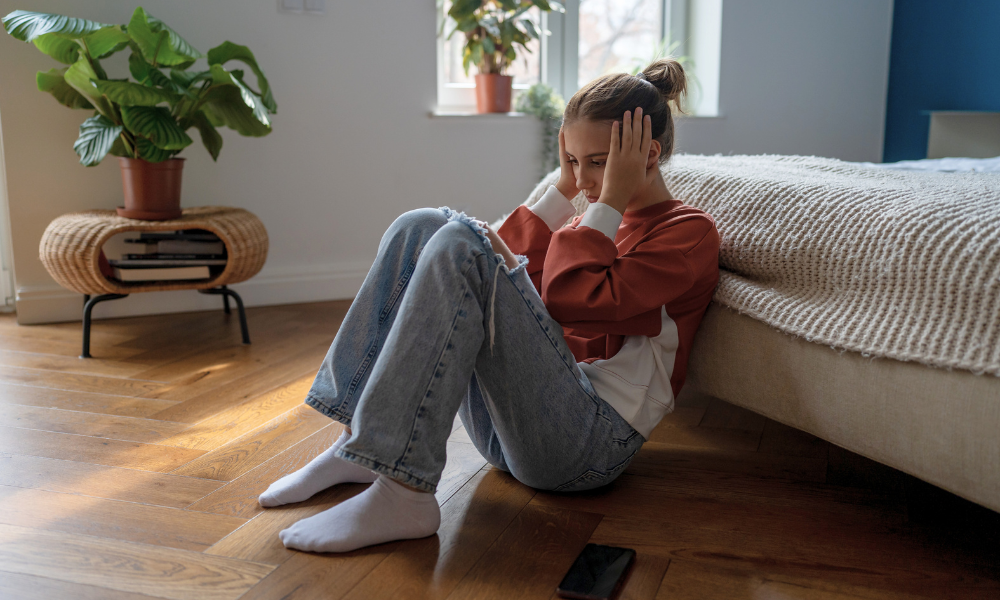
gen z stressed

Generation Anxiety: Why the World Looks Different for Gen Z

When you go into the grocery store do you look around to see who is nearby — just in case anyone looks suspicious? Do you extra cautiously note your neighbors before diving into your bucket of popcorn at the movie theater, noting where the exits are “just in case”? Or maybe you just don’t even go to the movie theater anymore — because, why take the risk? For Millennials, Gen Xers, and Baby Boomers, these are relatively new behaviors we’ve seen develop over the course of their lifetimes as more and more tragedies have unfolded in our world. But for Gen Z, it’s always been that way.   How Gen Z Sees the World Whereas every other generation, according to the Generational Power Index, has cited 9/11 as the most significant historical event during their lifetime (even the Silent Generation placed 9/11 above World War II), that’s not the case in the short lives of Gen Z and those even younger, Gen Alpha. For them, it’s been one thing after another: The tumultuous 2016 Trump election. George Floyd’s murder and the Black Lives Matter movement. School shootings. More frequent and devastating hurricanes. Pulse Nightclub shootings. The Me Too movement. The tech revolution. COVID-19... The list goes on. And it’s provoking anxiety. How do we expect Gen Zers, who have been homegrown in this environment, to hope for the best when they see mass shootings day after day, watch our planet ripped apart by climate events, and see widening political discord — especially with the 2024 election ahead? As a psychologist who specializes in treating anxiety in the Gen Z population, I know that this fear is real. It’s not something to gaslight or minimize. The reaction of anger, of fear, of hopelessness is warranted. It’s appropriate. Seeking Positive Change However, just because these have been our circumstances, I’m also still clinging to a sense of hope that it can get better. And if anyone is going to make that positive change, it’s going to be (and already is) Gen Z. While Millennials were taught to people-please our anxiety away, Gen Z is not afraid to speak up for what they believe is right. They are the first to put together a rally, show up at a city hall meeting, or post about an injustice they see.  So let’s step up to the plate to help Gen Z. No matter how old we are, let’s take inspiration from their activism and get a little uncomfy by speaking up for what we believe is right. After all, we often aren’t willing to endure the unease of change until we’re uncomfortable enough in our present situation. I call this empowered acceptance. We start by accepting what is. We don’t deny or minimize what’s going on; we look at it head on.  We also don’t inundate ourselves in it either, though. We set boundaries on our screen time and step up our in-person socialization time. Steps To Empowerment Then, we lean into our empowerment and take action, both personally and collectively. This includes things like registering to vote, educating ourselves on issues — perhaps by watching a documentary or reading from a reliable source — and having respectful dialogues to try to better understand one another.  Taking action is the balm that we need for our anxiety. Rather than standing on the sidelines and sitting on our hands, we can start using those hands for good. We count ourselves in and acknowledge how each of us can play a part in making a change for good.  It has become difficult to live like this day in and day out. Let’s not be the frog in the pot of boiling water before it’s too late; let’s jump out and set things straight. Our future generations deserve it. What will you do this week to move the needle in the right direction?  Dr. Lauren Cook is a therapist, consultant, speaker, and author who specializes in anxiety — particularly among millennials and Gen Z. Her latest book is Generation Anxiety: A Millennial and Gen Z Guide for Staying Afloat in Uncertain Times.
Read More
Modern Victory Garden

The Modern Victory Garden

More than a century ago, people in numerous countries around the world — including the United States, Canada, and Britain — were strongly encouraged to grow fruits and vegetables in their backyards. Governments urged citizens to grow their own food to help offset rationing and food shortages during World War I. The rallying cry around encouraging citizens to grow their own food was, “Food Will Win the War” and the gardens were dubbed victory gardens. The trend continued with World War II, when America boasted 20 million victory gardens. But after World War II ended, many people abandoned their gardens just as industrial/factory farming was ramping up.  The modern victory garden  We are in a different kind of war today that has more casualties and deaths than any military war. We are in a nutrition/health war today, where the enemy includes all the big food producers and their lobbyists that influence government policies on food ingredients, food labeling, and food regulations. When more than two-thirds of the foods in a typical supermarket are basically junk foods that are manipulated to be addictive (using combinations of sugars, fat, and salt) and offer little nutritional value — including cookies, pies, snacks, crackers, chips, sauces, pastas, breads, juices, sodas, frozen pizzas, pre-made meals — we have a serious food crisis. (Add the even worse conditions of food deserts in inner cities and Native American reservations, and the situation is even more critical.) Additionally, most restaurants, from fast food to fancy, source their raw materials from low-quality, factory-produced meats, fruits, and vegetables — adding to the food crisis. Sadly, we are losing this war. Food manufacturers and restaurants go unchecked and we have seen a frightening increase in chronic illnesses and metabolic syndrome (a cluster of conditions that occur together, increasing risk of heart disease, stroke, and type 2 diabetes). We need a new rallying cry; perhaps one of these will stick: “Growing Your Own Food Will Save Your Life.” “Save Your Life: Grow Your Own Farm-acy.” “Grow a Garden. Save Your Life.” Victory Gardens Everywhere The theory is that just about anyone who has housing can have a victory garden, though it is much easier for people with a patch of land. But some ideas of locations for victory gardens include: Window boxes Front porch pots Rooftops Raised beds (on driveways, patios, etc.) Yards (side benefit: getting rid of useless grass areas) Community gardens Church/Synagogue/Mosque grounds Once you decide on the foods you want to grow, you can make realistic plans based on amount of space for your garden. Growing at least some of your own food guarantees the quality and freshness of your fruits and vegetables and reduces the amount of money spent at the supermarket. If you simply can't grow your own food, the next best alternative is supporting others who do — whether personal friends or local farmers —and only eating the foods when in season. Find farmers and farmers markets in your area. It’s about more than food Besides enjoying some of the healthiest and freshest foods, gardening has other benefits, including: Reconnecting with nature. Many of us live sedentary, indoor lives; a garden reconnects us with our food and with nature. Exercise. The amount of exercise relates to the size of the garden, but tending to it, pruning, weeding, etc. all count as movement — and moving is good for us. Vitamin D. Gardening outside (with proper precautions for too much sun) provides us with a natural supply of this important vitamin that helps improve our immune system, bone density, and much more. Improving mood and memory. Gardening offers many people a boost in mood and a lessening of anxiety, depression. Planning and working the garden has also been shown to improve cognitive functions as well. Empowerment. Growing at least some of your own food is empowering — you are taking control of your health and wellness and what you eat. Fosters community. Even if you only grow your own food, you might take a master gardening class offered in your community to get growing/canning tips, or, if you’re like me, share the bounty of the garden with neighbors and/or the local food bank. Of course, if you join a community garden, you immediately have a new community of like-minded people. With so many benefits, what are you waiting for? Why not start planning your victory garden today? Dr. Randall Hansen is an advocate, educator, mentor, ethicist, and thought leader dedicated to helping the world heal from past trauma. He is founder and CEO of EmpoweringSites.com, a network of empowering and transformative websites, including EmpoweringAdvice.com, where this article originally appeared.
Read More
United States Map

Do you Live in the Happiest City or State?

If happiness is a state of mind, then where you live may make your trip to bliss a little bit easier. Since the place you call home is where you most likely spend a great deal of your time, it would be nice if that city or state also contributed to your well-being. Research suggests that living in certain locations and environments can make you happier for a variety of reasons, including greater access to green and blue spaces, strong social support systems, more opportunities for physical activity, higher levels of education and economic stability. As a whole, the United States regularly ranks around the 15th happiest country in the world, according to the World Happiness Report. But there are cities and states within the country that rank higher than others in happiness, giving residents living in those areas the opportunity to greater life satisfaction. The Happiest Cities and States in America  WalletHub, an online personal finance company, regularly ranks both the happiest cities and states in America. Their methodology for these lists includes three key categories to determine the results, including emotional and physical well-being, income and employment, and community and environment. According to Wallethub, their analysis is based on a mix of existing research from some of the leading studies in positive psychology as well as data compiled from a variety of sources, such as the 2024 U.S. Census Bureau and the Bureau of Labor Statistics. Free to Be Happy in Fremont WalletHub’s Happiest Cities in America list shows which of the largest cities in the U.S. had happier people. Fremont, California was named the happiest city in the country for the fifth consecutive year. Located in the Bay Area, residents of Fremont enjoy more than 1200 acres of green spaces, parkland and other outdoor amenities which provide plenty of opportunities for exercise and relaxation.  Other factors include a friendly place to raise a family, low divorce rates, and low unemployment. A few other Bay Area cities that made the list include San Jose (3) and San Francisco (7). Here are the top ten happiest cities in the U.S. according to WalletHub: Fremont, CA Overland Park, KS San Jose, CA Madison, WI Irvine, CA Honolulu, HI San Francisco, CA Pearl City, HI Columbia, MD Scottsdale, AZ You’ll Find More Joy in Utah While multiple cities in California made the ‘Happiest Cities’ list, it isn’t the happiest state, at least according to WalletHub. In the Happiest States in America list, released by WalletHub in September of 2023, Utah ranks No. 1. Using the same factors as the ‘Cities’ list, Utah is also the top state in the country for providing a great work environment, having the lowest divorces rates and high volunteer rate, which all contribute to greater well-being. Utah Hawaii Maryland Minnesota New Jersey Connecticut California Florida Idaho Nebraska
Read More
Unhappy woman covering her face.

Positive People Aren’t Always Happy People

The terms “positivity" and "happiness" are often used interchangeably, leading to misconceptions about their true meanings and implications. As a happiness expert, I emphasize the need to distinguish between a positive outlook and a deeply satisfying, meaningful existence. Positivity revolves around adopting a favorable perspective on life's events. It's the choice to focus on the bright side, to maintain an optimistic outlook even in challenging circumstances, and to embrace the sunny side of situations more often than not. Cultivating positivity is cultivating a mindset, fostering resilience, and a constructive approach to life's challenges. On the other hand, happiness transcends the immediate positivity of a given moment. It is a state of contentment and satisfaction with life as a whole. Unlike positivity, happiness doesn't center around cheerfulness. Instead, it encompasses a broader range of emotions, allowing room for both joy and pain. A happy life involves experiencing more pleasant, feel-good emotions than painful ones, but it doesn't mandate perpetual positivity. True happiness extends beyond fleeting moments and is rooted in a sense of meaning and purpose. It's about finding fulfillment in one's journey and feeling deep connections in the world. Happiness is a multi-faceted concept, encompassing various elements that contribute to a sense of well-being. One crucial aspect is the belief that life holds meaning and purpose. This depth distinguishes happiness from mere positivity, as it requires introspection and a holistic evaluation of one's existence. Understanding the distinction between positivity and happiness is vital for individuals on their journey to a more fulfilling life. Embracing positivity can serve as a tool for navigating daily challenges and fostering a healthier mindset. Simultaneously, recognizing the depth and complexity of happiness allows individuals to seek a more profound sense of fulfillment beyond fleeting moments of positivity. Experts like me acknowledge that maintaining a positive outlook at all times is neither realistic nor necessary for a happy life. Acknowledging positive and challenging emotions is an integral part of embracing the complexity of human experience. So, as you embark on your journey toward well-being, remember that positivity is a valuable companion, but it's not the destination. Happiness, with its depth and complexity, awaits those who embrace both the ups and downs, finding meaning in every twist and turn of life's remarkable journey. Tia Graham is a Chief Happiness Officer, founder of the workplace wellbeing company Arrive At Happy, and author of the best-selling book, Be a Happy Leader. To learn more about Tia, watch her Ted talk, visit her website, or check out her Arrive at Happy podcast. You can also follow her on Instagram, Facebook, and YouTube.
Read More